A fragrant journey through Hesse and Mecklenburg – Two German states with unique fragrance worlds
- REIMA AirConcept GmbH
- Jul 14
- 4 min read

Germany can not only be seen or heard – but also smelled. That's precisely what our olfactory journey is all about. We'll gradually discover the German states from a very special perspective: through their typical scents, smells, and aromas. This time, our journey takes us to Hesse and Mecklenburg-Western Pomerania. Two regions that could hardly be more different, yet both possess a distinctive olfactory identity.
While Hesse delights with apple wine, herbs, and traditional coziness, Mecklenburg stands for Baltic Sea air, pine forests, and unspoiled nature. Those who pay close attention to their sense of smell will discover a completely new side to these two German states.

Hesse – Between apple wine, herbs and big-city flair
Hesse lies in the heart of Germany and combines economic strength with a rich cultural heritage. Frankfurt am Main is an international financial center, Wiesbaden impresses with elegant villas and historic buildings, while expansive forests and rolling hills foster a connection with nature.
But what does Hesse actually smell like?
The most recognizable scent is undoubtedly that of Äppelwoi, as Hessian apple wine is affectionately called. Its slightly tart, fruity aroma is as much a part of Hesse as the traditional apple wine taverns in Frankfurt-Sachsenhausen. Anyone strolling through these quaint establishments immediately notices the blend of fermented apple cider, wood, and convivial gatherings.
This very scent is emblematic of Hessian coziness.
Besides the famous apple wine, Frankfurt's green sauce also contributes to the typical aroma of Hesse. It consists of seven fresh herbs – including parsley, chervil, chives, sorrel, and cress. The result is an intensely fresh, slightly spicy herbal fragrance that instantly evokes the feeling of summer.
This specialty is so popular that it even has its own festival. This impressively demonstrates the importance of regional aromas and flavors in Hesse.
Of course, there's much more to Hesse than that. Especially in the winter months, hearty dishes like Handkäs mit Musik (a type of cheese with onions and caraway seeds) or Ribs with Sauerkraut are popular in small restaurants. Strong cheese notes, vinegar, onions, and caraway seeds create a distinctive aroma that many Hessians immediately associate with home.
The scents change again during the Christmas season. Roasted almonds, marzipan, rosewater, and freshly baked Frankfurter Kranz cake fill the air. Warm, sweet aromas waft everywhere, instantly evoking memories of Christmas markets.
But Hesse is more than just tradition. Frankfurt, in particular, blends modern architecture with international flair. Skyscrapers, banks, and businesses stand alongside historic old town streets. If one were to capture this side of Hesse in a fragrance, bergamot, cedarwood, amber, and elegant woody notes would be a fitting choice.
This creates an exciting contrast between rural coziness and modern metropolis.
Mecklenburg – Where the Baltic Sea and nature set the tone
Leaving Hesse, we reach the German Baltic coast in Mecklenburg-Western Pomerania.
Even the first breeze makes it clear that a completely different world of scents begins here. Fresh sea air, salt, iodine, and the scent of water immediately dominate the perception.
That's precisely why Mecklenburg has such a calming effect on many people. The clear air conveys a sense of freedom and vastness, while the wind constantly brings new scents.
Typical of Mecklenburg are the miles of Baltic Sea beaches on Rügen, Usedom, or the Fischland-Darß-Zingst peninsula. Behind the dunes grow extensive pine forests, their resinous scent mingling with the salty sea air.
This combination makes Mecklenburg unique.
The famous chalk cliffs on Rügen also possess their own unique character. Here, mineral notes mingle with damp sea spray, moss, and the ancient beech forests of the Jasmund National Park. Especially after a rain shower, an extraordinary blend of fresh forest, damp earth, and sea is created.
Anyone who has ever walked there will immediately recognize that scent.
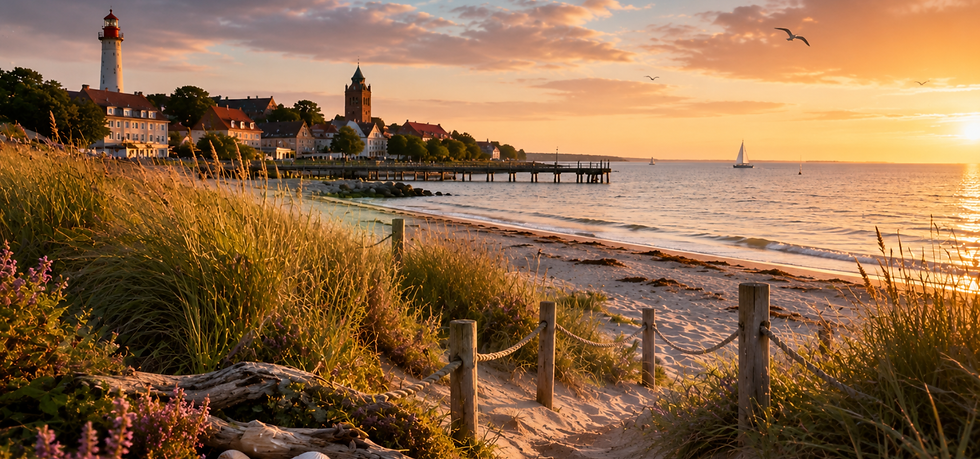
Mecklenburg delights with maritime scents
Besides nature, the numerous coastal towns also contribute to the typical fragrance landscape of Mecklenburg.
Small cafes, fish restaurants, and smokehouses are clustered together along the beach promenades. The aroma of freshly smoked mackerel, eels, or herring wafts through the air from afar.
Add to that fries, fish sandwiches, coffee, waffles, and ice cream. Together with the salty Baltic Sea air, it creates a scent that many immediately associate with vacation.
The ports of Warnemünde, Wismar, and Sassnitz also possess their own unique character. Here, wooden jetties, ship diesel, tar, and brackish water mingle with the scent of freshly smoked fish.
This combination seems unusual at first glance, but it is inextricably linked to Mecklenburg.
Another landmark is sea buckthorn. The orange berries grow in many places along the coast and are processed into juices, jams, liqueurs, candies, or tea.
The fruity-tart scent of sea buckthorn is therefore as much a part of Mecklenburg as the sound of the Baltic Sea.
Mecklenburg offers much more than just the Baltic Sea
Many people associate Mecklenburg solely with the sea. However, the state also boasts a second, completely different olfactory landscape: the Mecklenburg Lake District.
Here, freshwater lakes, reeds, water lilies, and extensive forests dominate the landscape. Instead of salty air, the air smells of damp wood, aquatic plants, and summer meadows.
In spring, vast fields of rapeseed spread their sweet, honey-like fragrance across the land. In summer, freshly cut grass, hay, and grain are added to the mix. It is precisely these rural aromas that lend Mecklenburg a special tranquility.
Anyone driving or walking through this landscape experiences a completely different character than on the coast – and that is exactly what makes Mecklenburg so diverse.
Scent tells stories
Whether Hesse or Mecklenburg – both federal states impressively demonstrate how closely scents are linked to memories.
A hint of apple wine immediately evokes memories of cozy evenings in a Frankfurt pub for many. The scent of fresh herbs brings to mind green sauce. At the same time, often just a salty sea breeze or the fragrance of sea buckthorn is enough to mentally transport people back to the Baltic Sea coast of Mecklenburg.
This is precisely where the special power of our sense of smell lies. Scents convey emotions faster than words and often remain in our memory for many years.
That's why it's worthwhile to discover Germany not only with your eyes, but also with your nose. Because every region has its own unique olfactory signature.
Our olfactory journey through Hesse and Mecklenburg impressively demonstrates how different landscapes, traditions, and specialties can smell. And it is precisely this diversity that makes every trip a special experience – long before you take the first photo.


Comments